Sasquatch Watch of Virginia is pleased to announce the addition of a new member to the group. She is small, smart, walks on four legs and has one heck of a nose. We have in our possession a Beagle puppy that we have named “Autumn”. You may ask “Why?”
We plan to train her to pick up the scent and track Bigfoot/Sasquatch. How? She was picked up when only 5 weeks old. Since then, we have obtained some “possible” Bigfoot/Sasquatch hair from an anonymous source. The hair has been laboratory tested and results were returned as “almost human”. Does that mean that the hair is that of Bigfoot/Sasquatch? No, of course not. But could it be? Sure! Point being, what does it hurt to step out on a limb and try something new?
 We have allowed the Beagle to sniff the hair everyday. At first, she was extremely reluctant to get near it, which was very interesting. She would pull back in a jerking motion every time the hair sample was brought near her nose. After a couple of weeks, she began taking more comfortable sniffs of the hair sample to the point where she now sniffs it very willingly. We are hoping, if this hair sample is indeed Bigfoot/Sasquatch hair, that the hair has some type of scent that is similar to every Bigfoot/Sasquatch creature. Could this dog eventually lead us to where these creatures live and dwell? Only time will tell. In the meantime, until she is old enough to be taken out into the field for research and investigation, she will continually be given a scent of the hair sample.
Why was a Beagle chosen for this task? 
The Beagle is a breed of medium-sized dog. A member of the hound group, it is similar in appearance to the Foxhound but smaller, with shorter legs and longer, softer ears. Beagles are scent hounds developed primarily for tracking hare, rabbit, and other game. They have a keen sense of smell and tracking instinct that often sees them employed as detection dogs for prohibited agricultural imports and foodstuffs in quarantine around the world. They are popular as pets because of their size, even temper, and lack of inherited health problems. These characteristics also make them the dog of choice for animal testing.

The Beagle is a breed of medium-sized dog. A member of the hound group, it is similar in appearance to the Foxhound but smaller, with shorter legs and longer, softer ears. Beagles are scent hounds developed primarily for tracking hare, rabbit, and other game. They have a keen sense of smell and tracking instinct that often sees them employed as detection dogs for prohibited agricultural imports and foodstuffs in quarantine around the world. They are popular as pets because of their size, even temper, and lack of inherited health problems. These characteristics also make them the dog of choice for animal testing.
Alongside the Bloodhound, the Beagle has one of the best developed senses of smell of any dog.[33] In the 1950s John Paul Scott and John Fuller began a 13 year study into canine behaviour. As part of this research they tested the scenting abilities of various breeds by putting a mouse in a one acre field and timing how long it took the dogs to find it. The Beagles found it in less than a minute, while Fox Terriers took 15 minutes and Scottish Terriers failed to find it at all. Beagles are better at ground-scenting (following a trail on the ground) than they are at air-scenting, and for this reason they have been excluded from most mountain rescue teams in favour of collies, which use sight in addition to air-scenting and are more biddable.[33] The long ears and large lips of the Beagle probably assist in trapping the scents close to the nose.[34]
Although bred for hunting, Beagles are versatile and are nowadays employed for various other roles in detection, therapy, and as family pets.[29] Beagles are used as sniffer dogs for termite detection in Australia,[70] and have been mentioned as possible candidates for drug and explosive detection.[71][72] Because of their gentle nature and unimposing build, they are also frequently used in pet therapy, visiting the sick and elderly in hospital.[73] In June 2006, a trained Beagle assistance dog was credited with saving the life of its owner after using his mobile phone to dial an emergency number.[74]
Although bred for hunting, Beagles are versatile and are nowadays employed for various other roles in detection, therapy, and as family pets.[29] Beagles are used as sniffer dogs for termite detection in Australia,[70] and have been mentioned as possible candidates for drug and explosive detection.[71][72] Because of their gentle nature and unimposing build, they are also frequently used in pet therapy, visiting the sick and elderly in hospital.[73] In June 2006, a trained Beagle assistance dog was credited with saving the life of its owner after using his mobile phone to dial an emergency number.[74]
We know first hand here in Virginia about the usefulness of Beagles.

Marlowe is a certified termite-sniffing Beagle that works for the Pro-Tech Termite and Pest Control Company operating in the Virginia, Maryland, and Washington D.C. area. Trained by Master Dog Trainer Bill Whitstine, Marlowe has undergone more than 600 hours of training demonstrating his ability and accuracy in detecting termites. Marlowe is a powerful new weapon against the destructive termites and a welcome new addition to ProTech's team of inspectors. Marlowe can inspect and locate termites in places that human inspectors cannot. He can detect termites behind walls, under floors, beneath the soil, and otherwise inaccessible areas of a home or commercial building. This is a fantastic advantage for the real estate buyer because Marlowe offers a 100% Guarantee against the absence of termites - and no other company will offer that!
Master Dog Trainer Bill Whitstine also trains Beagles as drug-sniffing and arson detection dogs. Mr. Whitstine's arson dog has been instrumental in collecting evidence, which has assisted law enforcement agencies in putting hundreds of criminals behind bars. Marlowe, like all of Mr. Whitstine's Beagle trainees, was rescued from a dog pound. He lives with his handler, Brian Embrey, also a certified inspector.
We here at Sasquatch Watch of Virginia are very excited to try this new approach. We will keep our research blog at the website (http://www.sasquatchwatch.net/) updated with progress reports of our work with Autumn. Autumn will be taken on her first research project at the age of 16 weeks. Until then, stayed tuned…

Marlowe is a certified termite-sniffing Beagle that works for the Pro-Tech Termite and Pest Control Company operating in the Virginia, Maryland, and Washington D.C. area. Trained by Master Dog Trainer Bill Whitstine, Marlowe has undergone more than 600 hours of training demonstrating his ability and accuracy in detecting termites. Marlowe is a powerful new weapon against the destructive termites and a welcome new addition to ProTech's team of inspectors. Marlowe can inspect and locate termites in places that human inspectors cannot. He can detect termites behind walls, under floors, beneath the soil, and otherwise inaccessible areas of a home or commercial building. This is a fantastic advantage for the real estate buyer because Marlowe offers a 100% Guarantee against the absence of termites - and no other company will offer that!
Master Dog Trainer Bill Whitstine also trains Beagles as drug-sniffing and arson detection dogs. Mr. Whitstine's arson dog has been instrumental in collecting evidence, which has assisted law enforcement agencies in putting hundreds of criminals behind bars. Marlowe, like all of Mr. Whitstine's Beagle trainees, was rescued from a dog pound. He lives with his handler, Brian Embrey, also a certified inspector.
We here at Sasquatch Watch of Virginia are very excited to try this new approach. We will keep our research blog at the website (http://www.sasquatchwatch.net/) updated with progress reports of our work with Autumn. Autumn will be taken on her first research project at the age of 16 weeks. Until then, stayed tuned…



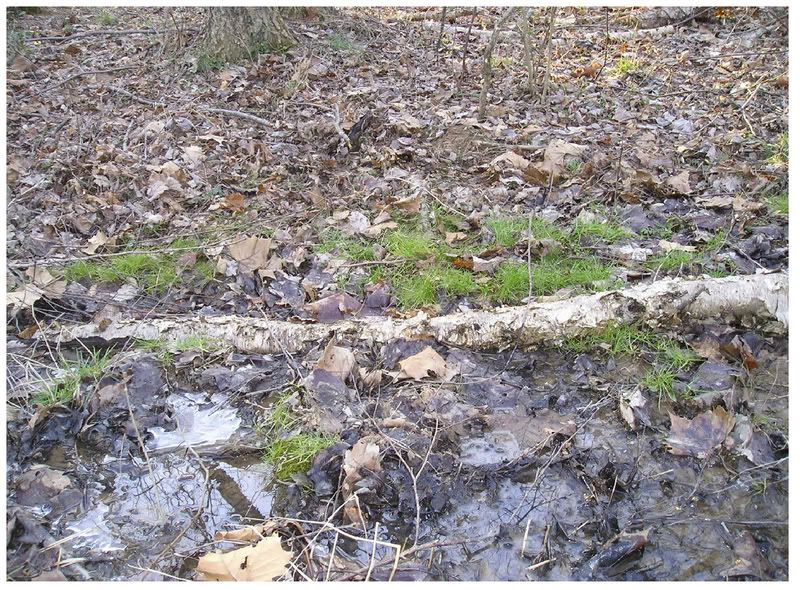
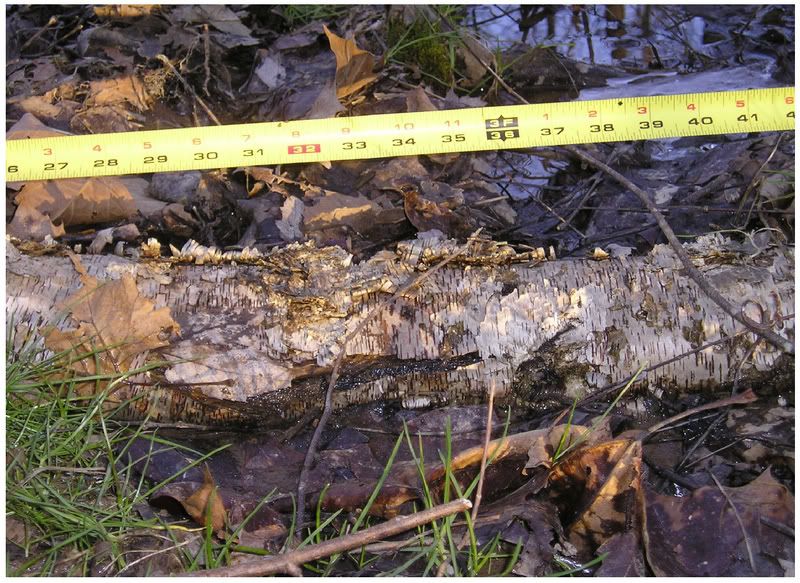


 And of course,
  If you are asking yourself, "Why are you posting this?". Here is the answer. Folks, we don't find possible evidence every single time we go out into the field! Certainly, anyone who says they do are not be completely truthful. I can say that there have been many times I have searched and found absolutely nothing! Is there anything wrong with that? NO. However, you will notice that I will post field research EVEN WHEN NOTHING IS FOUND! I think this is very important. First of all, it shows that we are very SERIOUS in our investigations. We are not out there trying to find ANYTHING to call Bigfoot evidence. Second, I think folks need to see that we are out there making an attempt to find evidence even when we don't. How many sites dedicated to Bigfoot/Sasquatch research do you see doing that? Try ZERO!!!
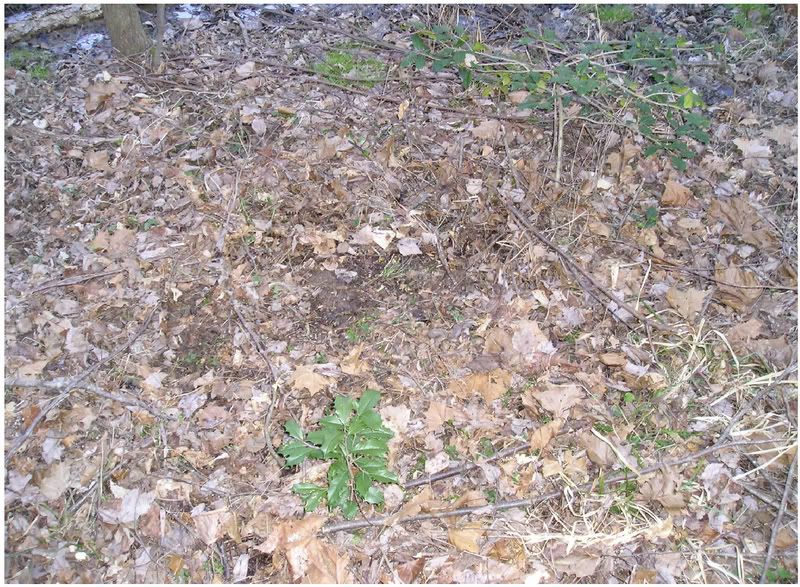
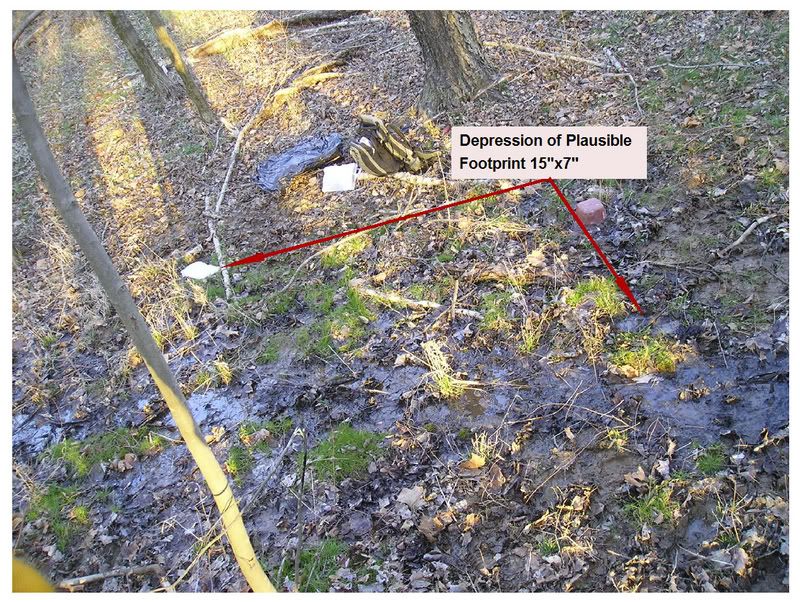
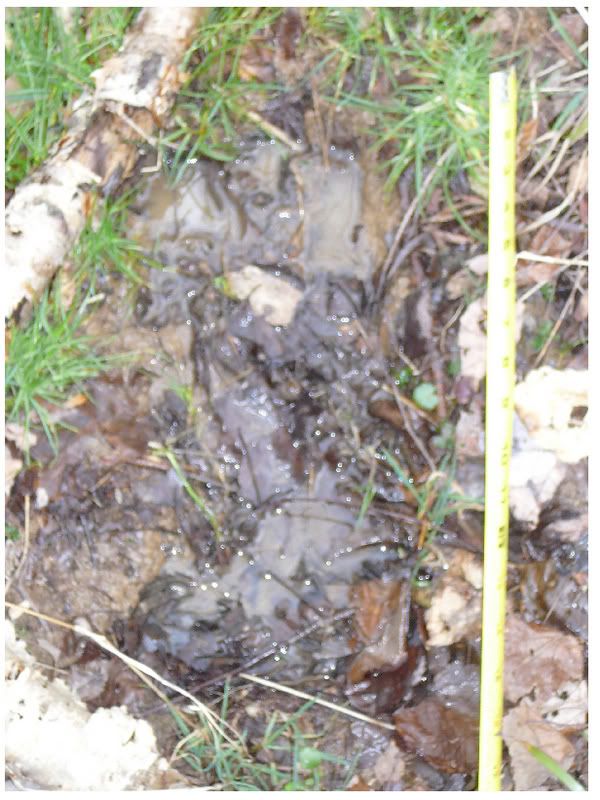
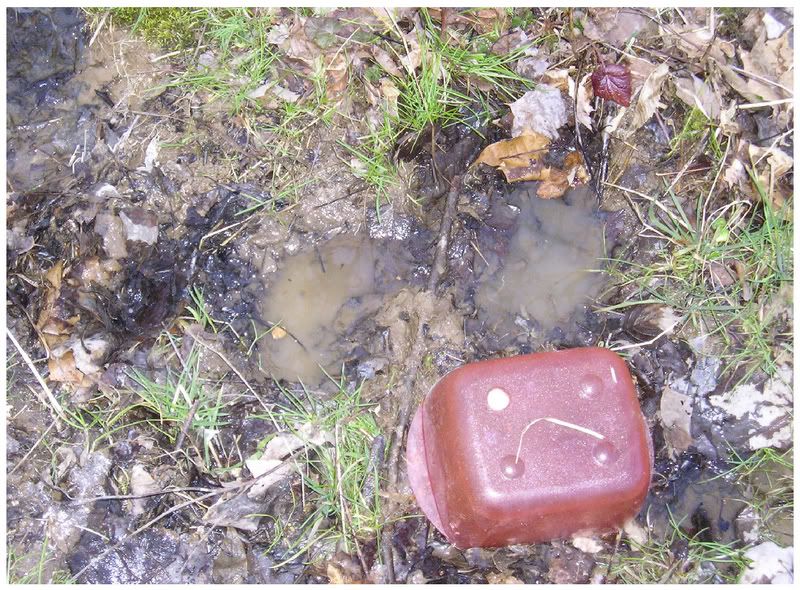
  The day of our investigation was cold (36 degrees F) and windy (10-15 mph). Our main purpose for the site visit was to cast a possible print we had found about 3 weeks earlier. Temperatures below freezing prevented us from casting the print previously. The print measured 15-inches in length and 7-inches in width. Below is a photo of the print prior to casting.
 Billy Willard poured the casting material into the print at about 4:30 pm. While the cast was setting up, Tom and Billy performed additional investigation of the area.
 Finding the additional tracks we believe further substantiates the findings.
 Below is a photo of the stick configuration. Again, careful searching was done to determine if this could all occur from natural falls. No evidence could be found to show this was a natural occurrence.
  A well-known researcher gave us a suggestion and theory to test out on certain stick structures. It was suggested to begin recording the positions of certain sticks or logs (particularly the top and longest one) and record the pointing directions of them. Surprisingly, the top and longest stick or log in both configurations pointed northeast/southwest. Now, what does this mean? We don't know if it means anything. Could we theorize that this could be some type of navigational device? Sure, it's possible, but further research of these structures and other discovered structures needs to be performed. Below is another, smaller stick structure found. And yes, the larger, top stick is pointing northeast/southwest.